
The person entering your home matters. At Ease in the Home, our care team includes professional caregivers and Certified Nursing Assistants, also called CNAs. They provide personal, non-medical support in the comfort of the client’s home. We look at more than a caregiver’s work history or open schedule. We also consider their skills, personality, communication style and ability to meet the client’s needs. Our goal is to find a caregiver the client can trust, respect and feel comfortable with.
A caregiver may become an important part of a client’s daily life. They may help with personal care, meals, movement, companionship, errands, appointments and household tasks. They may also spend many hours talking with the client and learning about their routines. Families need someone skilled and dependable. They also need someone who is patient, kind and respectful.
That is why our approach considers both the caregiver’s abilities and their connection with the client.
Each state has rules for people who provide care in a client’s home. We follow the screening, registry and background-check rules that apply to the caregiver’s role and the state where they work. A background check is an important safety step, but it is only one part of the process. Training, experience, skills and personality also matter.
Training helps caregivers understand their duties and provide safe, respectful support. Illinois home-services workers must complete at least ten hours of starting training:
The training covers important topics such as client dignity, privacy, independence, infection control, emergencies, communication, abuse prevention and support for people with physical or mental changes.
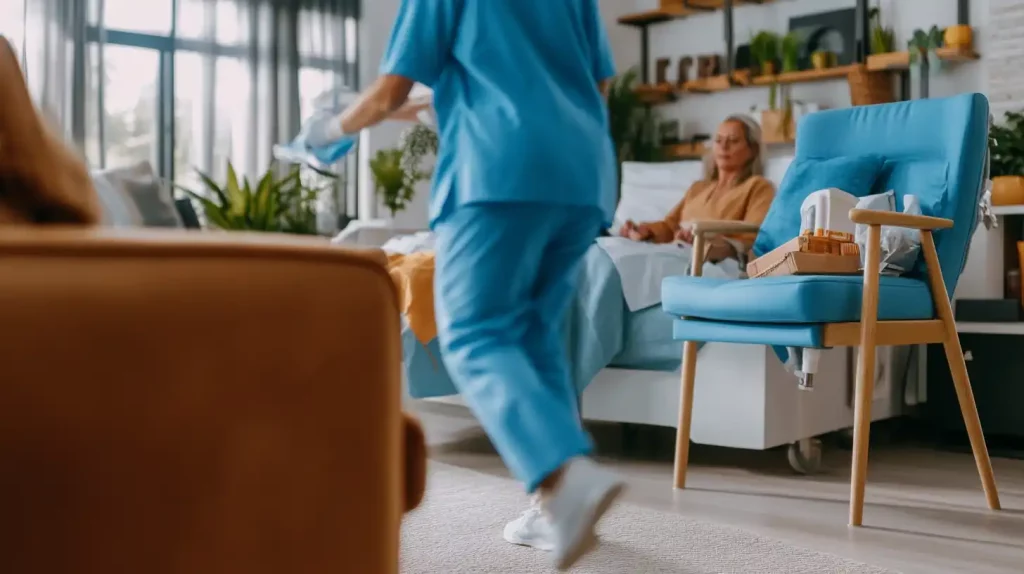
Caring for someone with Alzheimer’s disease or another form of dementia requires patience and understanding. Dementia may change a person’s memory, mood, behavior and ability to communicate. A caregiver should know how to stay calm, respect familiar routines and avoid causing fear or confusion.
Ease in the Home’s leadership includes Certified Dementia Practitioners. Chris Breneman, the founder of Ease in the Home, is a Certified Dementia Practitioner, CDP #252621. Brad Grubaugh, who leads the California office, is also a Certified Dementia Practitioner. Our Human Resources Manager, Diane Robertson, holds this credential as well.
Their knowledge helps guide caregiver selection for clients living with memory loss. Our caregivers provide non-medical support. They do not diagnose health problems or replace doctors, nurses or other medical professionals.
A successful match is about more than filling an open shift. We consider the client’s needs, personality and daily life. We then look for a caregiver whose skills and working style fit the case.
We start by learning about the client’s daily routine, care needs, personality, interests and communication style. We also ask about the home environment, preferred schedule and the family’s main concerns. This helps us understand what kind of caregiver may be the best fit.
Some clients may need an experienced caregiver. Others may benefit from the added training of a CNA. We review the tasks involved and choose someone whose background fits the case. Having a CNA does not mean the client is receiving skilled nursing or medical care. Every caregiver must stay within the approved care plan and their allowed role.
We look at the caregiver’s experience, training, schedule and comfort with the client’s needs. We also think about personality and communication style. One client may prefer someone calm and quiet. Another may enjoy a caregiver who likes conversation, games or outdoor activities. These details can make a major difference in the care relationship.
Before care begins, the caregiver receives the information needed for the assignment. This may include the approved care tasks, work schedule, daily routines, household preferences, safety concerns and family contact instructions. Private information is shared only when it is needed to support the client.
Care needs can change over time. A caregiver match may also need to change. Families should speak with us if something does not feel right. Our local team can review the situation and discuss the next step.
Both caregivers and CNAs can provide valuable support at home, but the titles are not the same. A caregiver may help with companionship, meals, personal routines, errands, light housekeeping and other daily tasks.
A CNA has completed approved training and testing. Their status is recorded through the state registry. A CNA may have more training in personal care, safe movement and activities of daily living. However, a CNA working in non-medical home care does not replace a nurse or provide medical treatment. The tasks performed depend on the care plan and the rules for the worker’s role.
Training and background checks are important. Trust and comfort are important too. A caregiver should understand the client’s needs while also respecting their home, choices and routines. Our concierge approach allows us to look beyond an open schedule. We work toward a care relationship in which the client feels respected, the family feels informed and the caregiver understands what matters most.
No. Our team includes both caregivers and CNAs. We choose the right type of worker based on the client’s needs and the tasks involved.
We use the background checks and registry checks required for the caregiver’s role and state.
Illinois and California have public registries for covered care workers. Our team can explain which registry applies to the caregiver being considered.
We consider the client’s care needs, schedule, personality, interests and daily routines. We then compare these needs with the caregiver’s skills, experience and working style.
Families should contact us if a match does not feel right. Our local team can review the situation and discuss other options.
No. Ease in the Home provides non-medical home care. Our caregivers and CNAs do not replace doctors, nurses or other medical providers.
Tell us about your loved one, their daily routine and the kind of support they may need.
We will listen, explain the available options and help find the type of caregiver who may be the best fit.

Ease in the Home provides compassionate, personalized in-home care to help seniors and adults live safely, comfortably, and independently.
Barrington, IL: Chris Breneman / 773.551.7164
San Diego, CA: Brad Grubaugh / 760.470.8200
This website and its content are copyright of Ease In The Home. Copyright © 2026. Ease In The Home. All rights reserved.