Get non-medical help during the day and night. Ease in the Home helps families compare 24-hour care and live-in care, understand the schedule and choose support that fits the client’s routine.
24-hour care and live-in care provide different types of day and night support. With 24-hour care, caregivers work rotating shifts so an awake caregiver can be available at all times. A live-in caregiver has planned sleep periods, breaks and off-duty time, so live-in care is not continuous awake coverage.
The schedule sets coverage times. The care plan lists approved tasks. Support may include these areas, depending on needs and local availability.
Caregivers may help with bathing, dressing, grooming and toileting at agreed times. Support can follow the client’s usual morning and bedtime habits. Each task must match the worker’s training, the approved plan and the client’s comfort.
Conversation, music, reading and shared activities can bring connection to longer periods at home. The caregiver respects quiet time and personal space. Activities follow the client’s interests and energy rather than filling every hour with planned tasks.
Help may include simple meals, dishes, laundry and light tidying connected to the client’s daily life. Approved medication reminders may also be included. Caregivers do not set up doses, give medications or change medication directions through this service.
Approved support may include walking to the bathroom, changing position or moving between a bed and chair. Frequent overnight needs should be discussed when choosing coverage. Transfers and equipment use require suitable training and an appropriate care plan.
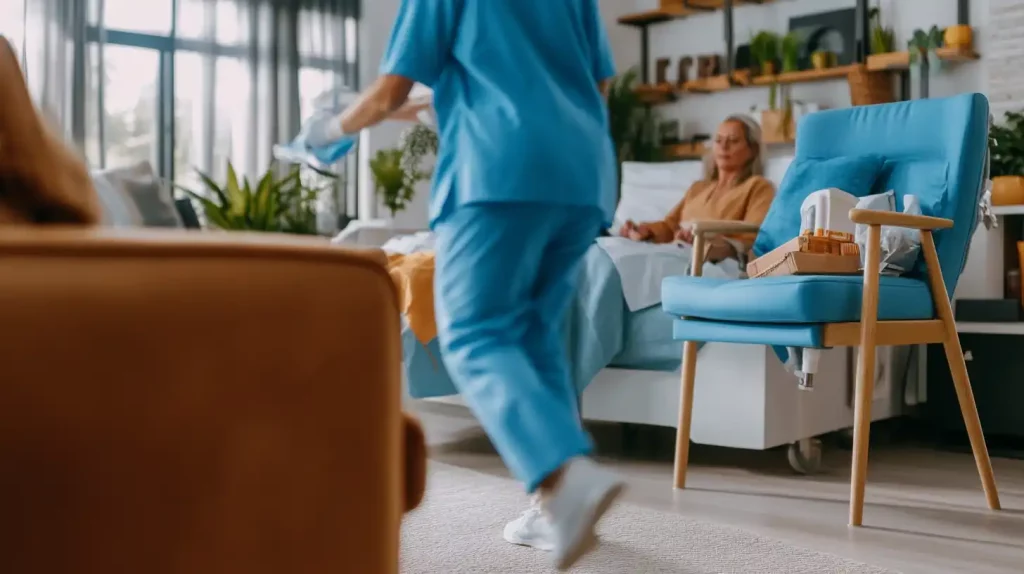
Sharing the home is a personal change. Clients may worry about privacy or changing their habits. We discuss these concerns while planning support.
The client can explain preferred meals, resting times, visitors and household routines. We also discuss private rooms and how the care team should communicate.
Clear boundaries help the client feel comfortable and show caregivers how to work respectfully in someone else’s home.
With 24-hour care, caregivers work in rotating shifts. This allows an awake caregiver to be available during the day and night. One person does not work around the clock.
With live-in care, a caregiver stays in the home but is not working every hour. The caregiver receives planned sleep periods, breaks and off-duty time. The plan explains when the caregiver is working and how the client’s needs will be handled during rest periods.
Live-in care may not fit when the client wakes often or needs someone awake all night. In that case, 24-hour care may be a better fit. The local team will explain which options are available and suitable.
Tell us when the client gets up, eats, rests and goes to bed. Describe when family help is available and where gaps remain.
We ask how often the client wakes and what help is needed. We also discuss whether the client needs an awake caregiver nearby. Nighttime needs can change the recommended arrangement.
We explain available 24-hour and live-in options, approved tasks and staffing needs. For live-in home care, we discuss sleeping space, breaks, off-duty time and how needs will be handled then. The schedule should make every responsibility clear.
We consider skills, personality and communication when selecting care team members. The plan identifies coverage times, shared instructions and family contacts. We also explain who to contact about a schedule change.
Tell us if the client begins waking more often or needs different support. We can review the plan and discuss changes. An arrangement that worked earlier may no longer provide enough coverage.
Longer schedules may involve several caregivers. Clear updates explain what happened earlier and what still needs attention. The care plan guides each shift. Updates may cover meals, completed routines, changes in comfort and concerns shared by the client. We explain how details will be recorded and which family member should receive updates.
Families should understand the contact process for staffing concerns. A clear plan helps avoid confusion about arrivals, coverage changes and who to call.
We review daytime and nighttime needs separately. The recommended arrangement follows the client’s actual routine, not simply a preference for one service label.
We choose caregivers and Certified Nursing Assistants based on the approved tasks. Our Certified Dementia Practitioner leaders value patience, clear communication and familiar routines.
Our Illinois and California operations provide licensed, non-medical care. Longer coverage does not add nursing treatment. Ask the local office about license details and available services.
Families have direct access to Ease in the Home owners. Local care leaders can discuss scheduling questions, changes in needs and concerns about the arrangement.
Families need to understand the caregiver schedule, nighttime coverage and sleeping space needed at home. We explain these details before the family makes a choice. Costs depend on the schedule, staffing and approved support. Live-in care and continuous awake care do not have the same staffing needs. The local team will explain the proposed charges and what they include.
Ask questions before deciding. The goal is a plan everyone understands as needs change.
No. Live-in caregivers need planned sleep and off-duty periods. If the client needs someone awake overnight, ask about shift-based 24-hour care.
Caregivers work in rotating shifts so an awake caregiver can be available at all times. The plan explains approved tasks, shift changes and contacts. The local team must confirm staffing and availability.
A live-in caregiver needs suitable sleeping space and clear plans for privacy, meals, breaks and off-duty time. The local office will explain the requirements and how the client’s needs will be handled during those periods.
No. This service provides non-medical support, even when a CNA is assigned. Wound care, injections, medication administration and other medical treatment require an appropriate healthcare provider. Home-care coverage does not replace emergency services.
Ask for a review if sleep patterns or support needs change. The team will explain the available schedules, staffing and new cost. Any change must be planned and confirmed first.
Contact the Ease in the Home team for the care address in Illinois or California. They will explain whether 24-hour or live-in support is available locally and suitable for the client.
You do not need to choose between 24-hour and live-in care before contacting us. Start by sharing what happens during the day, what nights are like and when family support is available.
We will listen, explain the differences and discuss a suitable non-medical plan. Together, we can identify the coverage needed to support the client’s routine while respecting everyone’s need for privacy and rest.
Ease in the Home provides compassionate, personalized in-home care to help seniors and adults live safely, comfortably, and independently.
Barrington, IL: Chris Breneman / 773.551.7164
San Diego, CA: Brad Grubaugh / 760.470.8200
This website and its content are copyright of Ease In The Home. Copyright © 2026. Ease In The Home. All rights reserved.