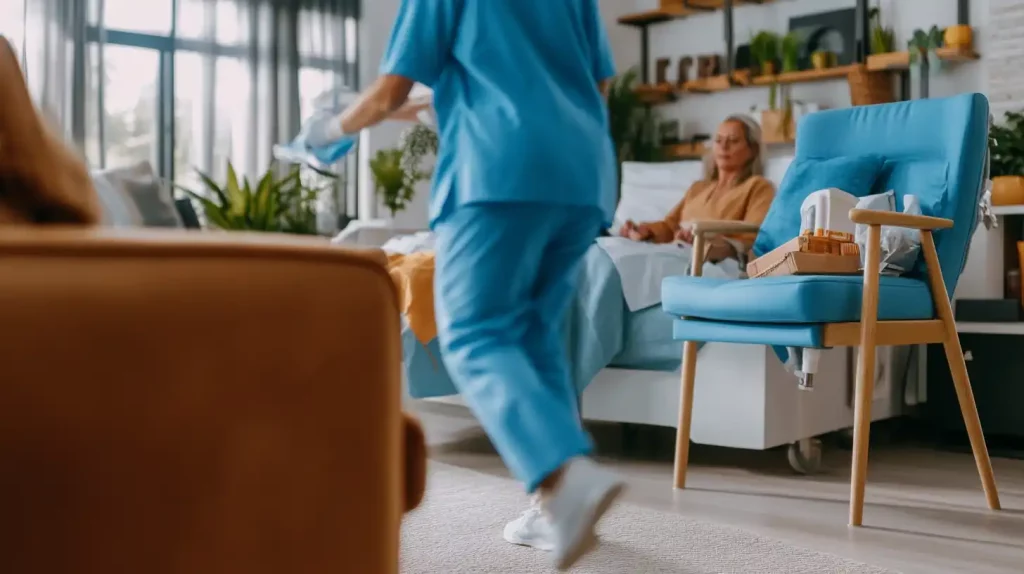
Post-Hospital and Post-Surgery Care for a Supported Return Home
Return home with dependable, non-medical help for daily routines. Ease in the Home supports seniors and adults after a hospital stay or surgery with personal care, meals, movement, errands and household tasks.
Illinois Licensed • #3001621
Caregivers & Certified Nursing Assistants
Chris Breneman, CDP #252621
Diane Robertson, CDP
Direct Access to Local Owners
Quick Answer: What Is Post-Hospital Care at Home?
Post-hospital care at home provides non-medical help after a person leaves the hospital or has surgery. A caregiver may assist with bathing, dressing, meals, movement, errands and medication reminders. The service follows an approved care plan but does not include wound care, injections, therapy or other skilled medical treatment.
What Recovery Care at Home Can Include
Each plan follows the client’s needs, written instructions and comfort. Support may include one task or several areas of help.
When possible, plan before discharge. The family can ask the hospital team what daily help, equipment and follow-up visits may be needed.
Preparation may include placing everyday items within reach, buying groceries, clearing walking paths and choosing a comfortable place to rest.
Medical equipment must be arranged and explained by the appropriate provider. Our team can discuss how approved non-medical support will fit around that equipment and the client’s routine.
Who May Benefit From This Care?
Is returning home after a hospital stay or outpatient procedure
Finds bathing, dressing, meals or household tasks harder than before
Needs approved movement help or transportation to follow-up visits
Has family members who cannot provide all the needed daily support
Non-Medical Care and Home Health Are Different
Post-surgery care at home can describe different services. Ease in the Home provides non-medical support with personal tasks, meals, errands, companionship and daily routines.
Home health care provides skilled medical services ordered and supervised by healthcare professionals. These services may include nursing, wound treatment, injections, therapy or medical assessments.
A client may receive both services. Our caregiver can work alongside a separate home health team, but each provider keeps a different role. Assigning a Certified Nursing Assistant does not turn our service into skilled nursing care.
The amount of help may change from day to day. A caregiver can support a difficult task and step back when the client can do more.
The client remains involved in choices about meals, clothing and routines. We also ask which everyday tasks the person wants to manage again.
Our role is not to promise a recovery result. It is to provide respectful daily help while the client follows the medical plan given by their healthcare team.
Some clients need home care after surgery for a short period. Others continue regular support after the first stage.
The schedule may begin with longer or more frequent visits. As tasks become easier, the family can ask for a review. Additional hours or another service may also be discussed.
Every schedule depends on the client’s needs and caregiver availability. Changes should be planned with the local office rather than assumed.
A caregiver after surgery may help with bathing, dressing, meals, light household tasks, movement, errands and approved medication reminders. The exact tasks depend on the written care plan.
Contact us as soon as the discharge date is known. Early planning provides more time to review the routine, discuss the home and confirm an available caregiver.
Transportation options depend on the client’s needs, local rules and the care plan. The local team will explain what is available. Medical transportation is a separate service.
No. Caregivers may provide approved reminders but do not administer medications, fill pill organizers or change directions. Medication questions should go to the prescribing healthcare provider or pharmacist.
No. Wound treatment, injections, therapy and other skilled services require an appropriate medical provider. Non-medical care can support everyday tasks while a separate home health team provides ordered treatment.
Support may cover the first days at home or continue longer. The schedule depends on the client’s needs and local availability. We review the plan when the amount of help changes.
You may know the discharge date but not how daily life will work at home. Tell us which tasks may be difficult, what the healthcare team has recommended and when family help is available.
We will explain the non-medical options and build a clear plan for the return home. As the client’s routine changes, the schedule and approved support can be reviewed.